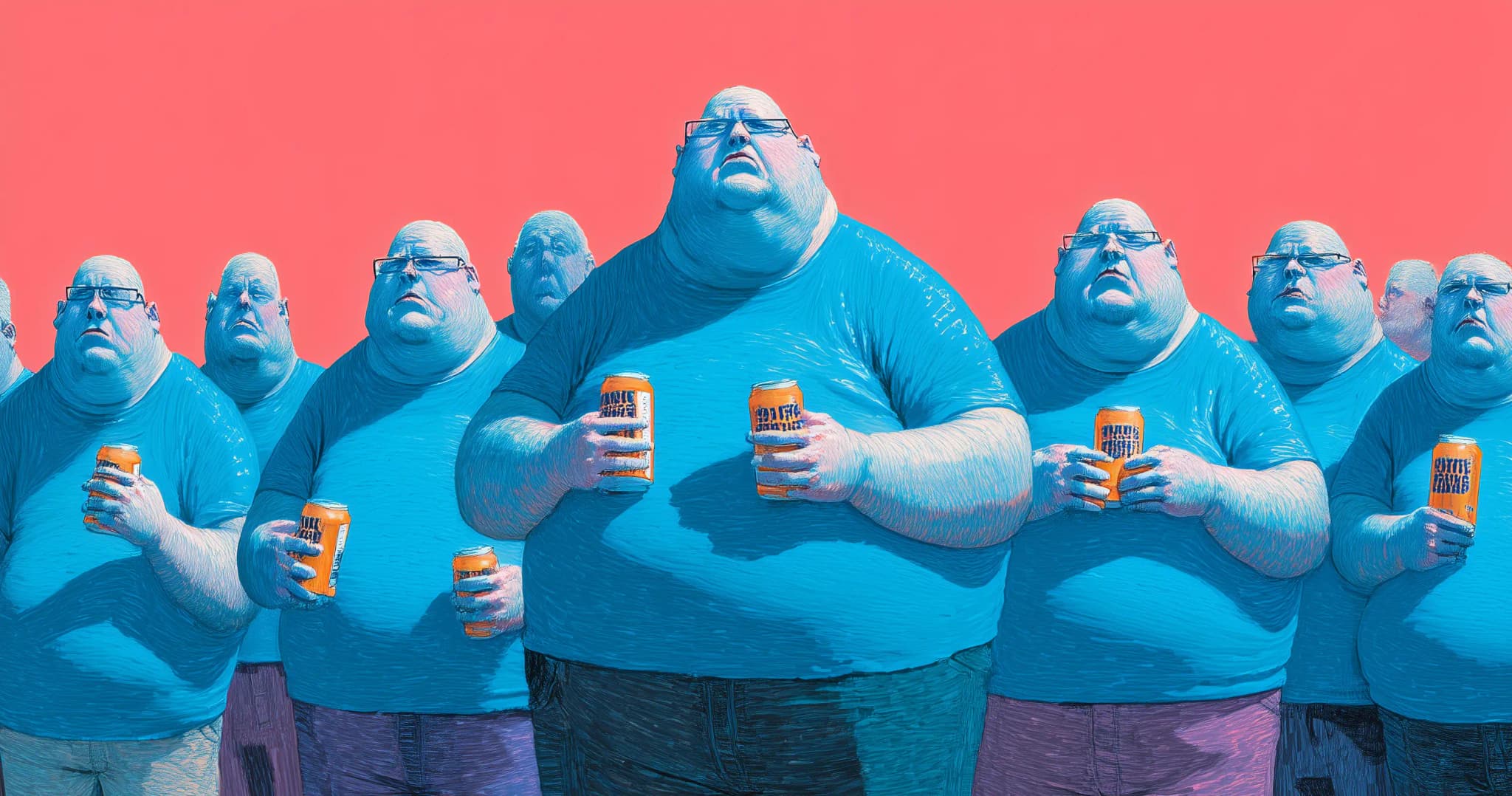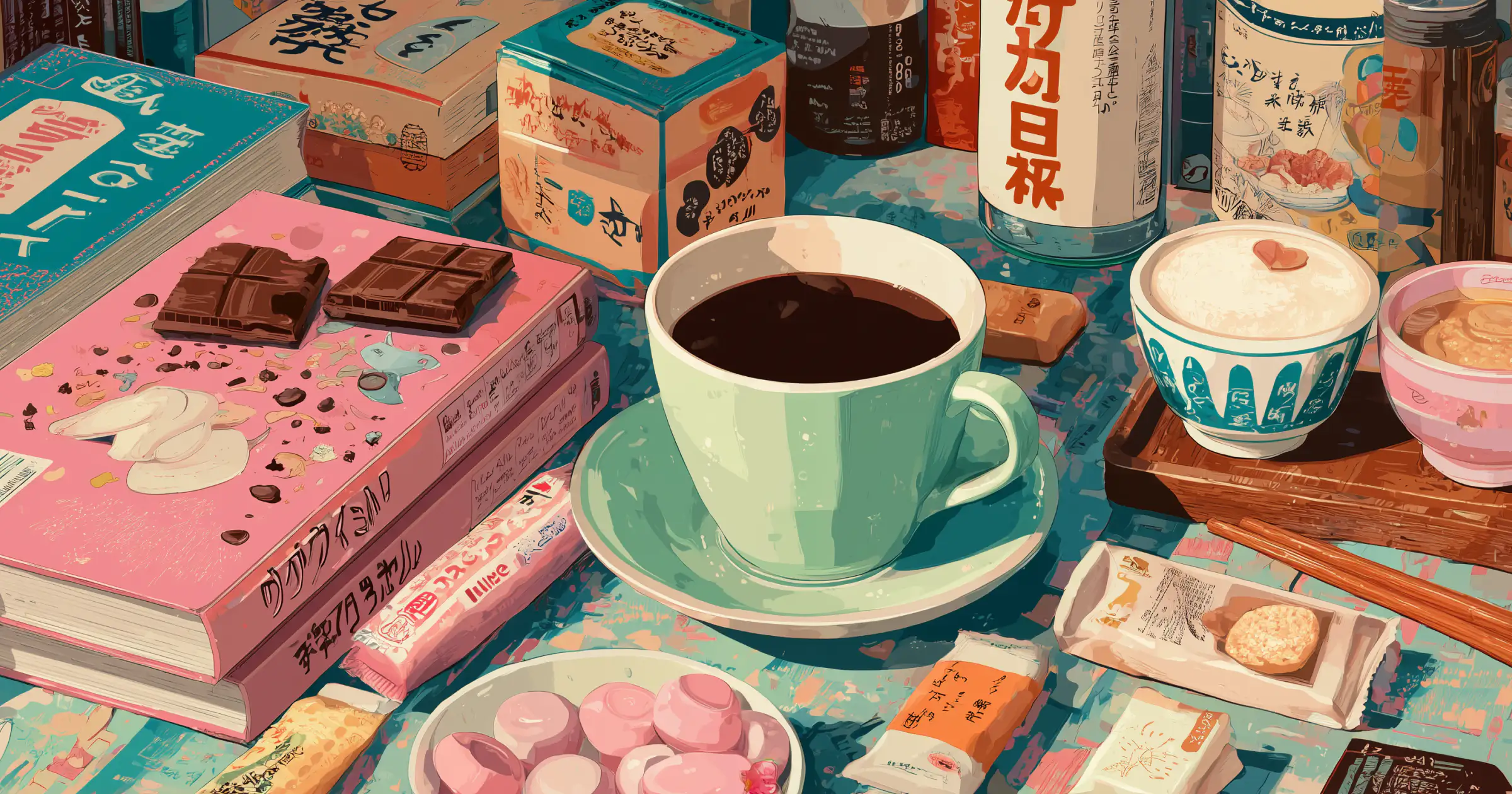
Japan in the early 1970s was, by almost every measure, an ideal consumer market: high purchasing power, dense urban populations, and a consumer culture so refined that convenience stores restocked their shelves three times a day and people queued two hours for a specific bowl of ramen.
And yet coffee, the beverage that had colonized every other major developed economy on earth, remained stubbornly marginal.

TL;DR
Nestlé couldn't sell coffee to Japanese adults, so they hired a psychiatrist who redesigned their entire go-to-market strategy from scratch. Instead of conventional advertising, Nestlé spent a decade feeding children coffee-flavored sweets, a behavioral marketing play that built emotional familiarity before the product even existed as a habit. A whole generation grew up craving the real thing. Japan is now the world's fourth-largest coffee importer.
Meanwhile, KitKat accidentally became a national good luck charm, and Nestlé's brand localization strategy ran with it so hard the bar eventually outsold every chocolate in the country. Together, these are two of the most effective long-term market entry strategies ever executed, built on consumer psychology and cultural patience, rather than traditional ‘advertising spend’.
Coffee's failure in Japan had nothing to do with price points, shelf placement, or campaign budgets.
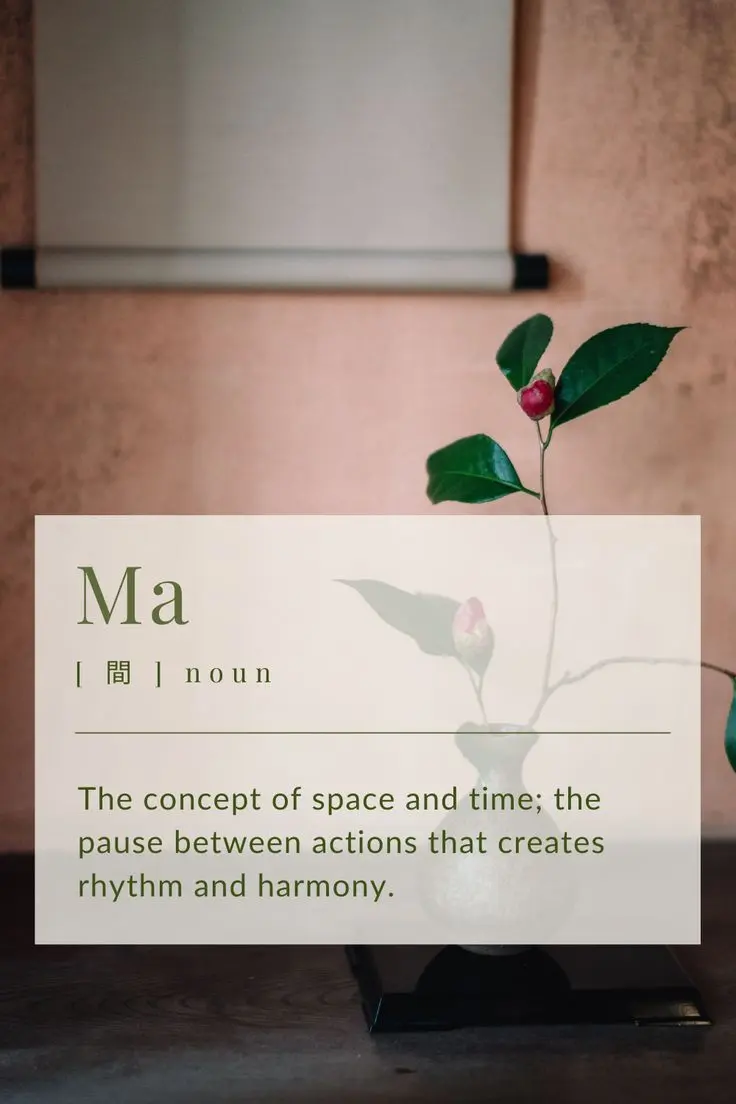
For most of its history, Japan had organized a significant portion of daily life around tea. Green tea, in particular, carries a cultural weight that is genuinely difficult to overstate for someone outside the tradition. There were ceremonies built around it, aesthetics, an entire philosophy of presence encoded in the act of preparation and drinking. The Japanese language even has a word, "ma," for the particular quality of silence and pause that tea cultivates. Tea was not a morning beverage. It was closer to a daily practice, something you did with intention rather than out of habit.
The Behavioral Science Insight Behind Nestlé’s Coffee Strategy in Japan
Clotaire Rapaille was a French child psychiatrist who had spent years working with children with autism before pivoting to what he called cultural code theory: the idea that consumer decisions are driven not by rational preference but by the unconscious emotional imprints formed in early childhood.
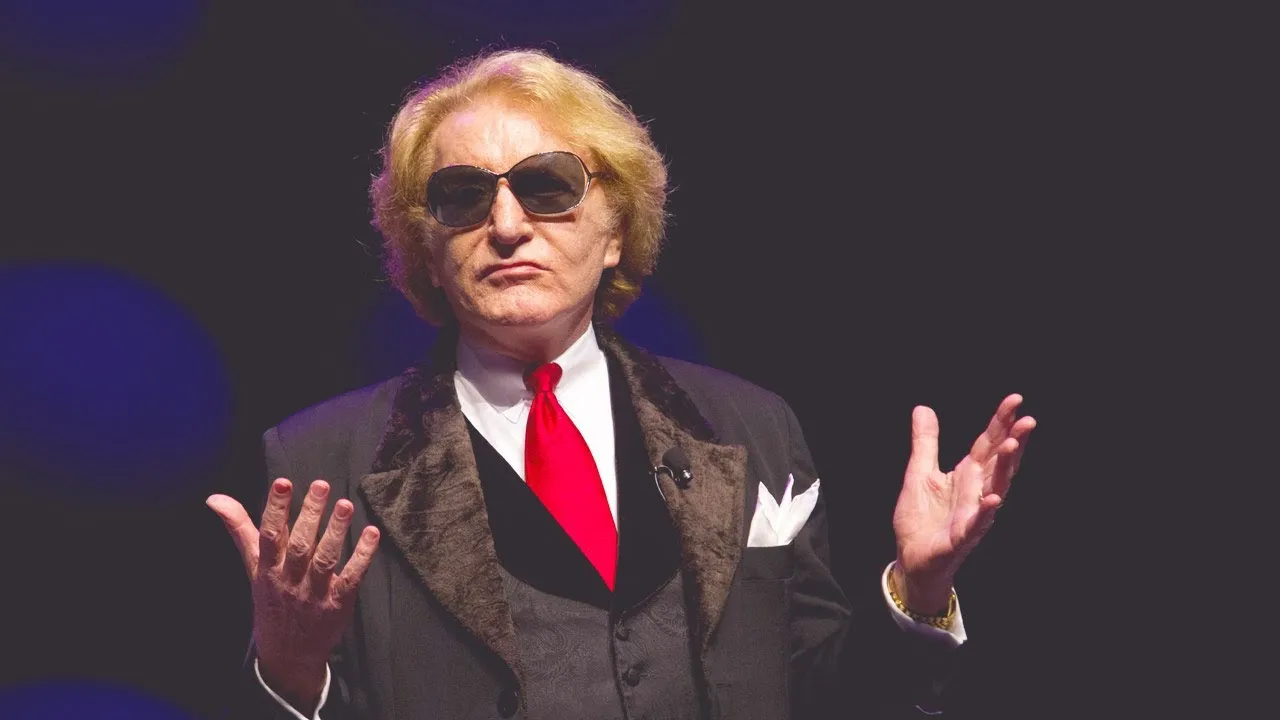
"The reptilian always wins," was Rapaille’s working motto, meaning that the deep, pre-rational brain governs purchasing behavior far more than any conscious evaluation of a product's merits.
Clotaire Rapaille explained that coffee simply didn’t have a cultural foothold in Japan.
While tea carried centuries of emotional significance, ritual, and memory baked into Japanese identity from childhood onward, coffee was a purely intellectual concept for most Japanese consumers. They understood what it was. They could describe its taste. They felt nothing when they encountered it. And as Rapaille argued, the absence of feeling is not a problem you can advertise your way out of. You can spend indefinitely on campaigns and still never move the needle, because the campaigns are reaching the cortex while the purchase decision is being made somewhere much older and deeper.
His recommendation followed directly from that diagnosis. Rather than continuing to market coffee to adults who had no emotional footprint for it, Nestlé should create that footprint in the next generation by introducing coffee flavor to children through products they already associated with pleasure. Coffee-flavored candies, desserts, jellies, chocolates, treats with no caffeine and no adult context, just the taste, embedded in moments of sweetness and reward. Let a generation grow up with coffee as a familiar flavor before they ever encountered it as a beverage. When those children became adults, the leap to drinking coffee would not feel like acquiring a foreign taste. It would feel like returning to something already known, just like childhood nostalgia.
Rapaille was proposing a strategy with a return horizon measured in years, not quarters. He was asking a publicly listed corporation to invest in building a market that would not exist until the children eating the candy had grown up, entered the workforce, and started needing something to get them through the afternoon. Most GTM strategies today are expected to show ROI in weeks, sometimes days. Rapaille was proposing the opposite: a go-to-market (GTM) play with a decade-long delay before the first signal of product-market fit.
The most striking thing about Rapaille is that he gave an insight that is almost impossible to act on inside a normal corporate structure. Someone senior had to hear "stop marketing to adults, feed the children candy, wait a decade" and say yes. That decision almost certainly met resistance. It’s actually a Miracle Strategy in play that it survived long enough to be executed.
Nestlé’s Candy Strategy in Japan, Coffee-Flavored Sweets That Built a Market
From the mid-1970s onward, Nestlé began flooding the Japanese market with coffee-flavored products aimed at children. Coffee jelly, which remains a staple in every Japanese convenience store even today, was among the first. Coffee-flavored chocolates, candies, and desserts followed. None of it was framed as a coffee industry initiative. It simply occupied the snack aisle like any other product, encountered by children in the ordinary contexts of after-school treats and family shopping trips.
What this produced, over roughly a decade, was a generation of Japanese children who had encountered coffee flavor dozens of times before they ever thought of it as coffee. No ritual attached, no adult context, no bitterness to push through. Just a familiar taste that reminds you of your childhood.
The coffee-flavored sweets proved popular enough that parents, curious about what their children were reaching for, tried them too. Some adults who had never developed much of a relationship with coffee as a beverage found themselves drawn to its flavor in a context that lacked the cultural gravity of sitting down with a cup. For some, it was the first genuine foothold.
By the late 1980s, the children who had grown up on these treats were entering the workforce. They were familiar with coffee's flavor and, crucially, they now had a practical reason to want the caffeine. When Nestlé reintroduced its instant coffee products to this generation, the reception was dramatically different. Sales accelerated in a way that caught even the company off guard. Coffee shops multiplied. Canned coffee, a format that barely exists in most other markets, emerged as one of Japan's most competitive consumer categories, eventually selling billions of units annually from vending machines on nearly every street corner.
By 2014, Japan was importing around 450,000 tonnes or ~64 billion cups of coffee a year
and had become the world's fourth-largest coffee importer. Nescafé had captured roughly 70% of the instant coffee segment. An entire market had been built from scratch, through a children's candy aisle, across a single generation.
The Nescafé Ambassador Program: How Nestlé Embedded Coffee Habits in Japanese Offices
By 2012, the generation raised on coffee-flavored sweets had been in the workforce for decades. Nestle moved to deepen its hold at exactly the moment when adult habits are most resistant to change.
The Nescafé Ambassador program offered Japanese offices a free Nescafé coffee machine, with the only condition being that one employee, the Ambassador, would manage capsule orders for their colleagues. The machine arrived at no cost, and only the capsules had to be ordered.
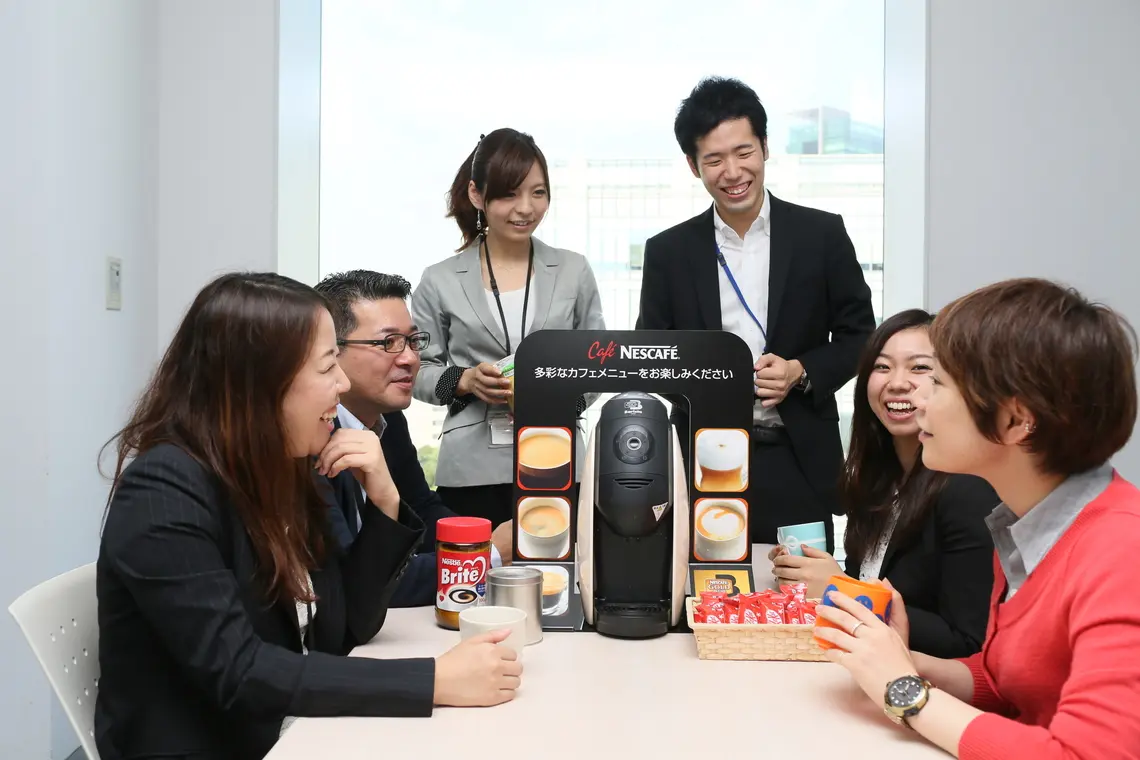
What looked like corporate generosity was a well-timed behavioral intervention. Workplaces are where habitual coffee consumption takes root for most adults, through the morning cup before the first meeting, the afternoon one that makes the last two hours survivable. These small rituals eventually stop feeling like choices at all. Once a brand embeds itself into that kind of routine, in a specific place and a specific context, it becomes genuinely difficult to dislodge.
At its peak, the program had placed machines across tens of thousands of Japanese offices. The candy aisle had built the emotional imprint. The Ambassador program made coffee a daily habit and automatic.
This was GTM in two acts: the first built emotional familiarity over a generation; the second converted that familiarity into a locked-in daily habit at the workplace level. Phase two only worked because phase one had already run.
How KitKat Entered Japan Before Nestlé Acquired Rowntree’s (1988)
While the coffee strategy was unfolding, a completely separate product was finding its footing in Japan, one that would eventually become even more culturally significant than Nescafé.
In 1972, British confectioner Rowntree's signed a licensing agreement with Fujiya, a Japanese confectionery company, to manufacture and sell KitKat in Japan. The bar went on sale the following year under Fujiya's operation, one item among many in Japan's crowded confectionery market, with no particular cultural footprint and no connection yet to Nestlé, which at that point was focused entirely on its coffee strategy.
That connection came in June 1988, when Nestlé acquired Rowntree's for $4.5 billion, becoming the world's largest chocolate and confectionery producer overnight. The deal brought KitKat's global distribution under Nestlé's control, with one notable exception: the United States, where Hershey held a pre-existing licensing agreement dating back to 1970 that Nestlé was obligated to honor. In Japan, Nestlé moved quickly to formalize its position, establishing Nestlé Mackintosh K.K. in 1989 as a joint venture with Fujiya. By 2000, Nestlé had fully acquired Fujiya's share, giving it complete control over the KitKat brand in Japan for the first time.
It was around the same period that something unexpected had been building in the Japanese market, something no one at Rowntree's or Nestlé had engineered or anticipated.
The “Kitto Katsu” Phenomenon: Why KitKat Became a Lucky Charm in Japan
Sometime in the 1990s, an unusual pattern began emerging in Kyushu, Japan's southernmost main island. Students preparing for university entrance examinations, one of the most high-pressure experiences in Japanese life, were being given KitKats as good luck gifts by parents, teachers, and friends.
The reason was purely phonetic. In Japanese, KitKat is pronounced "Kitto Katto," which sounds close enough to "Kitto Katsu," a phrase meaning "you will surely win," that the association had formed organically. In Kyushu specifically, the local expression "Kitto Katsutoo" made the resemblance especially strong. By around 2002, the behavior had spread nationally. According to Kotaku, one in three Japanese students now buys a KitKat before an entrance examination, and one in five reportedly brings one into the exam itself. A chocolate bar had become an edible amulet, without a single marketing yen having been spent to make it so.
There's something worth sitting with here: a multinational accidentally created a good luck charm without briefing an agency or consumer insight report. The charm emerged from the culture like folklore does: sideways, through repeated use, until it calcified into meaning. What Nestlé did next (lean into it, not over it) is rarer than it sounds. Most brands would have stamped a logo on it and killed the magic.
KitKat’s 300+ Flavors, Japan Post Campaign, and Omiyage Strategy
Nestlé's response to the Kitto Katsu phenomenon was to move on multiple fronts simultaneously, and to do it in a way that honored the organic meaning rather than replacing it with brand messaging.
In 2000, the same year Nestlé completed its full buyout of KitKat operations from Fujiya, the flavor localization program began with a strawberry KitKat launched exclusively in Hokkaido. The move was partly creative and partly a response to a practical retail problem: Japanese convenience stores rotated products off shelves frequently, making it difficult for any single item to hold a permanent listing. By producing smaller runs of regional and seasonal varieties, Nestlé could manage production costs while giving retailers a reason to keep cycling KitKat back into their lineups. Matcha followed in 2004. Soy sauce became the top-selling variety by 2010.
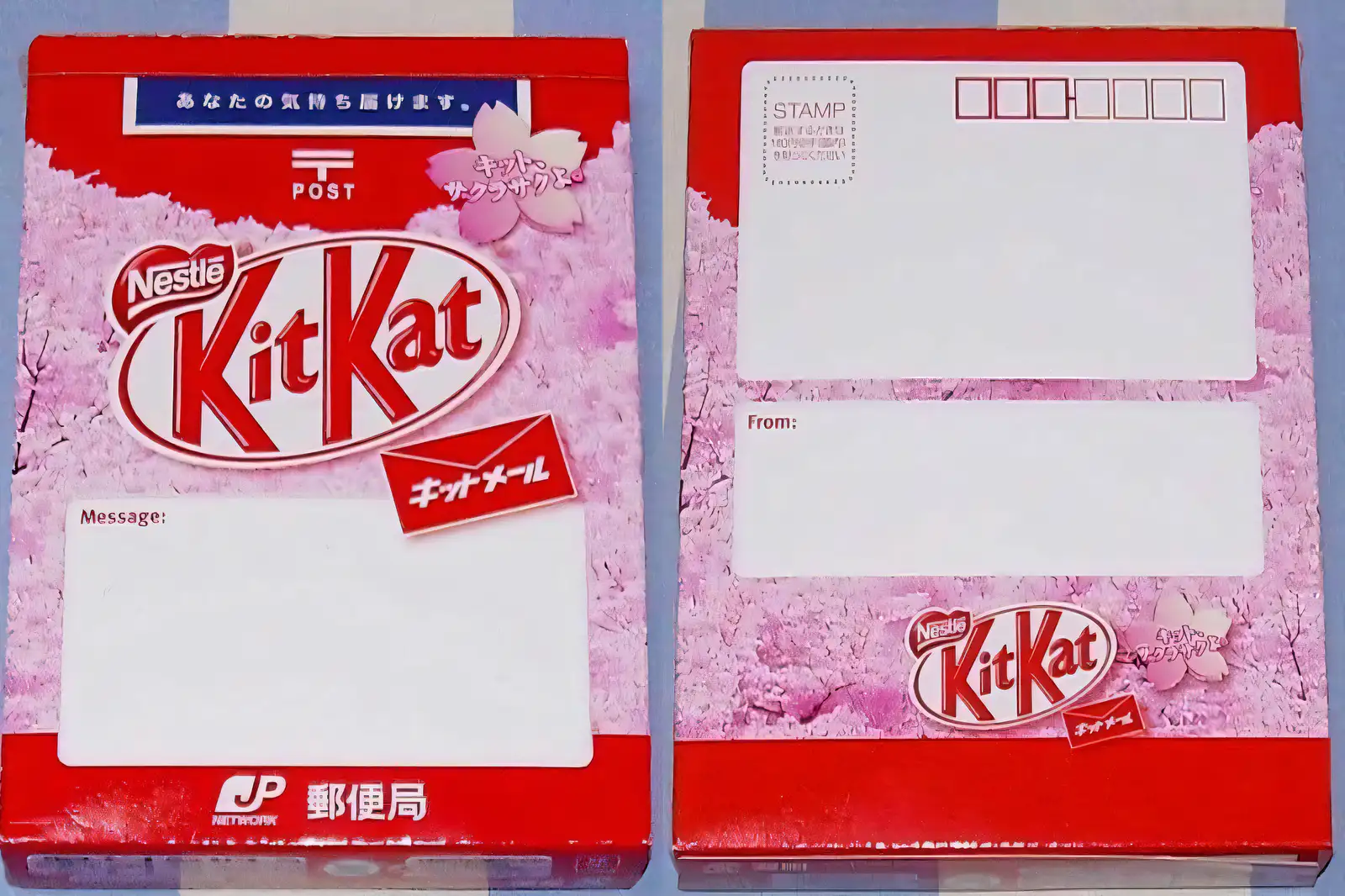
In 2005, the "Lucky Charm" advertising campaign formally embraced the Kitto Katsu association and won the Asian Brand Marketing Effectiveness Award. Then in 2009, Nestle partnered with Japan Post to launch what became one of the more inventive product campaigns in modern food marketing: customers could purchase specially packaged KitKats at any of 20,000 post offices across the country, write a message of encouragement in a dedicated space on the wrapper, and mail it directly to a student ahead of exams. The packages sold out within a month. The campaign won the Media Grand Prix at the Cannes Lions International Advertising Festival in 2010.
The regional flavor program aligned almost perfectly with omiyage, the Japanese custom of bringing back locally specific food gifts from wherever you have traveled. Omiyage carries genuine social weight in Japan: returning from a trip without something for your family or colleagues is considered a small but real failing, and every train station has a dedicated shelf stocked with products designed to encode a place and be carried home. Nestlé attributed the success of the flavor program directly to this tradition, and the fit was natural enough to look inevitable. The range eventually exceeded 300 seasonal and regional varieties and more than 400 limited-edition releases.
The premium tier followed. The KitKat Chocolatory, developed with celebrated Japanese pastry chef Yasumasa Takagi, opened in Tokyo in 2014 and had expanded to seven branches by 2015, serving more than a million customers and earning over two billion yen. By 2012, KitKat had overtaken Meiji Chocolate as Japan's top-selling confection, a position it held through 2014, in a market where Meiji had been the dominant player for decades.
How Nestlé’s Coffee Strategy and KitKat Marketing Reinforced Each Other in Japan
There is a detail in this story that tends to get overlooked: the point at which Nestlé's coffee strategy and its KitKat phenomenon met.
As the regional flavor program expanded through the 2000s, coffee varieties joined the lineup, among them espresso and café au lait. Within a long list of experimental flavors, these can look unremarkable. But their timing matters. By the time they arrived, the generation raised on Rapaille's coffee-flavored sweets was already deep into adulthood, already habitual coffee drinkers, already carrying decades of emotional familiarity with the flavor. A coffee-flavored KitKat, arriving within a product line already associated with pleasure, luck, and gift-giving, landed as something recognizable rather than something new.
The two strands of the Japan story, the coffee strategy built from the 1970s onward and the KitKat phenomenon that took hold in the 1990s and accelerated after the Rowntree’s acquisition, were separate in origin but reinforcing in effect. Both were simultaneously building emotional associations with Nestlé products within Japanese culture, through different mechanisms and on different timelines, and by the 2000s, those associations had become deeply entangled. It is a small detail in a large story, but it captures something about how well-designed long-term strategies tend to work through multiple reinforcing loops that compound on one another over time in ways no original brief could have fully anticipated.
What Nestlé’s Japan Strategy Teaches About Cultural Marketing and Consumer Psychology
The coffee strategy and the KitKat story look, on the surface, like two separate successes. But they came from the same underlying instinct: the willingness to understand a market to a depth most corporations never bother to reach.
Rapaille's contribution was more than just a campaign idea. It was a reframing of the problem itself. The question Nestlé had been asking, how do we market coffee to Japanese consumers, contained an assumption that the barrier was communicational. Rapaille dissolved that assumption by showing the barrier was developmental. Japanese consumers had no emotional imprint for coffee, and no advertisement would create one. Only experience could, and only early experience at that. That distinction generated a strategy that advertising alone could never have produced, and it required Nestlé to trust a framework that offered no short-term validation whatsoever.
The KitKat story worked for a different but related reason. Nestle noticed an emergent consumer behavior and chose to honor it rather than redirect it. The Kitto Katsu connection was not manufactured, and the omiyage alignment was not imposed from above. Both were already happening in the culture. The Japan Post mailing campaign and the regional flavor program were acts of amplification, not invention. The decision to give local teams genuine creative authority, rather than constraining them with global brand standards, is what made the explosion of flavors possible in the first place.
Both stories also required a time horizon that most traditional GTM playbooks cannot accommodate. In today's AI-driven environment, GTM is measured in sprint cycles. Nestlé's Japan strategy is a reminder that the most defensible market positions are sometimes the ones that took the longest to build because no competitor can shortcut thirty years of cultural embedding.
Lessons for Brand, Product, and Design from Nestlé’s Japan Market Strategy
For anyone working at the intersection of design, brand, and culture, the Nestlé Japan story is about what product thinking looks like when it starts with a genuine cultural understanding rather than from a product's internal logic.
Most brand strategies operate on the implicit assumption: we have something valuable, and here is how we explain that value to a new market. The product's category logic, its use case, and its emotional register all of it travels from the originating market into the new one, and the work of marketing is translation. The unexamined assumption is that the product already belongs wherever it is being sent, and that the audience simply needs to be shown why.
What Nestlé demonstrated in Japan is that this assumption will occasionally fail, and that when it does, the only path forward is to start from the other end. Begin with the question of what the market's existing behaviors, memories, and cultural practices actually are. Map the distance between where consumer psychology sits and where it would need to be for the product to feel natural. Then design toward closing that distance, even if the timeline makes most planning cycles uncomfortable.
Japan is now one of the world's great coffee cultures, with a canned-coffee market, a thriving specialty café scene, and a per-capita consumption rate that rivals that of most Western countries. KitKat is something Japanese people give each other when they want to say they believe in you, mailed from post offices, carried home from train stations, placed on exam desks as quiet acts of encouragement. A Swiss multinational built both of those things, in a market that started with neither, across a timeline most corporate planning cycles cannot even imagine.
What made it possible was the willingness to ask a harder question first, and then the patience to live inside the answer for as long as it took.
A Note on the Story
Like most well-known business stories, this one has been simplified over time.
Clotaire Rapaille did work with Nestlé, and the idea that early emotional exposure shapes consumption is directionally sound. But the commonly told version, where a single insight leads neatly to a market being built, leaves out a lot of what was happening around it.
Japan’s relationship with coffee was already changing in parallel. Kissaten cafés had introduced coffee into social spaces. Post-war Western influence was gradually shifting preferences. Office culture was creating new daily routines where coffee fit naturally. Vending machines and canned coffee made it easy to access anywhere. These changes were unfolding over years, often without any central coordination.
The candy strategy, if it played the role it is often credited with, was part of this wider shift rather than the sole driver.
What it does highlight, though, is something more useful. When you work at the level of taste, memory, and habit, much of the downstream friction tends to resolve itself. Distribution, formats, and even occasions become easier to build around something people already feel familiar with.
That kind of shift does not happen quickly. It asks for patience, most companies do not have. But when it works, it compounds quietly, and for a long time.


 Hide reactions